Dreams, in Sigmund Freud’s view, are all configurations of “wish fulfillment” — endeavors by the unconscious mind to settle a conflict of some kind, whether something recent or something from the corners of the past. Because the data in the unconscious mind is in an ungovernable and frequently disturbing form, a “censor” in the preconscious won’t allow it to pass unchanged into the conscious.
During dreaming, the preconscious is looser in this duty than in waking hours, however is still heedful: as such, the unconscious mind has to distort and warp the meaning of its data to make it by the censorship. As such, pictures in dreams are frequently not what they seem to be, according to Freud, and need deeper interpreting if they’re to tell us about the unconscious thoughts.
Freud used to speak about dreams as “The Royal Road to the Unconscious”. He suggested the ‘phenomenon of condensation’; the thought that one simple symbol or picture demonstrated in an individuals dream might have multiple significances. For this very reason, he attempted to center on details during psychoanalysis and asked his patients about matters they may even believe trivial.
As he was centering on the biologic drives of the person, he said that if we notice a hollow object in our dreams, like a box or a cave, this is a symbolization of a womb, while an extended object is a symbol for penis. Ascribable to these statements, Freud got much criticism from those who thought him a “sexist” or “misanthrope”, as he was said to have overstressed the role of instinct, as if he believed individuals were “wild beasts”.
Exploring the World of Lucid Dreaming
$9.99 (as of March 17, 2026 00:35 GMT +00:00 - More infoProduct prices and availability are accurate as of the date/time indicated and are subject to change. Any price and availability information displayed on [relevant Amazon Site(s), as applicable] at the time of purchase will apply to the purchase of this product.)
Belonging: Remembering Ourselves Home
$16.18 (as of March 17, 2026 00:35 GMT +00:00 - More infoProduct prices and availability are accurate as of the date/time indicated and are subject to change. Any price and availability information displayed on [relevant Amazon Site(s), as applicable] at the time of purchase will apply to the purchase of this product.)
The Divinity Code to Understanding Your Dreams and Visions
$17.33 (as of March 17, 2026 00:35 GMT +00:00 - More infoProduct prices and availability are accurate as of the date/time indicated and are subject to change. Any price and availability information displayed on [relevant Amazon Site(s), as applicable] at the time of purchase will apply to the purchase of this product.)
The Power of Your Subconscious Mind
$12.99 (as of March 17, 2026 00:35 GMT +00:00 - More infoProduct prices and availability are accurate as of the date/time indicated and are subject to change. Any price and availability information displayed on [relevant Amazon Site(s), as applicable] at the time of purchase will apply to the purchase of this product.)
The Divinity Code to Understanding Your Dreams and Visions
$27.51 (as of March 17, 2026 00:35 GMT +00:00 - More infoProduct prices and availability are accurate as of the date/time indicated and are subject to change. Any price and availability information displayed on [relevant Amazon Site(s), as applicable] at the time of purchase will apply to the purchase of this product.)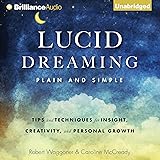
Lucid Dreaming, Plain and Simple: Tips and Techniques for Insight, Creativity, and Personal Growth
$15.82 (as of March 17, 2026 00:35 GMT +00:00 - More infoProduct prices and availability are accurate as of the date/time indicated and are subject to change. Any price and availability information displayed on [relevant Amazon Site(s), as applicable] at the time of purchase will apply to the purchase of this product.)
Beginner's Guide to Dream Interpretation: Uncover the Hidden Riches of Your Dreams with Jungian Analyst
$7.87 (as of March 17, 2026 00:35 GMT +00:00 - More infoProduct prices and availability are accurate as of the date/time indicated and are subject to change. Any price and availability information displayed on [relevant Amazon Site(s), as applicable] at the time of purchase will apply to the purchase of this product.)
Botanical Dreams Oracle: 56 Borderless Cards, Lush Collage Art by Popular Artist Catrin-Welz Stein, 68-Page Illustrated Guidebook, Inspirational Messages, Cycles of Nature
$11.10 (as of March 17, 2026 00:35 GMT +00:00 - More infoProduct prices and availability are accurate as of the date/time indicated and are subject to change. Any price and availability information displayed on [relevant Amazon Site(s), as applicable] at the time of purchase will apply to the purchase of this product.)
Modern Man in Search of a Soul
$0.99 (as of March 17, 2026 00:35 GMT +00:00 - More infoProduct prices and availability are accurate as of the date/time indicated and are subject to change. Any price and availability information displayed on [relevant Amazon Site(s), as applicable] at the time of purchase will apply to the purchase of this product.)